Asset-Based Carrier vs. Broker: Which One Actually Moves Your Freight?
When evaluating transportation providers, many shippers frame the decision as an either-or proposition: work with an asset-based carrier or work with a freight broker. In reality, that’s the wrong debate.
Both models play essential roles in today’s freight market, solving different transportation challenges. An asset-based carrier provides operational control through company-owned equipment and drivers, while a freight broker expands capacity and flexibility by connecting shippers with a network of qualified carriers.
Neither model is inherently superior. The best choice depends on freight characteristics, lane density, equipment requirements, shipment frequency, service expectations, and market conditions. Increasingly, leading transportation providers recognize that the strongest supply chains leverage both strategically. The question isn’t which model is better, but which is best suited for a particular shipment.
What Is an Asset-Based Carrier?
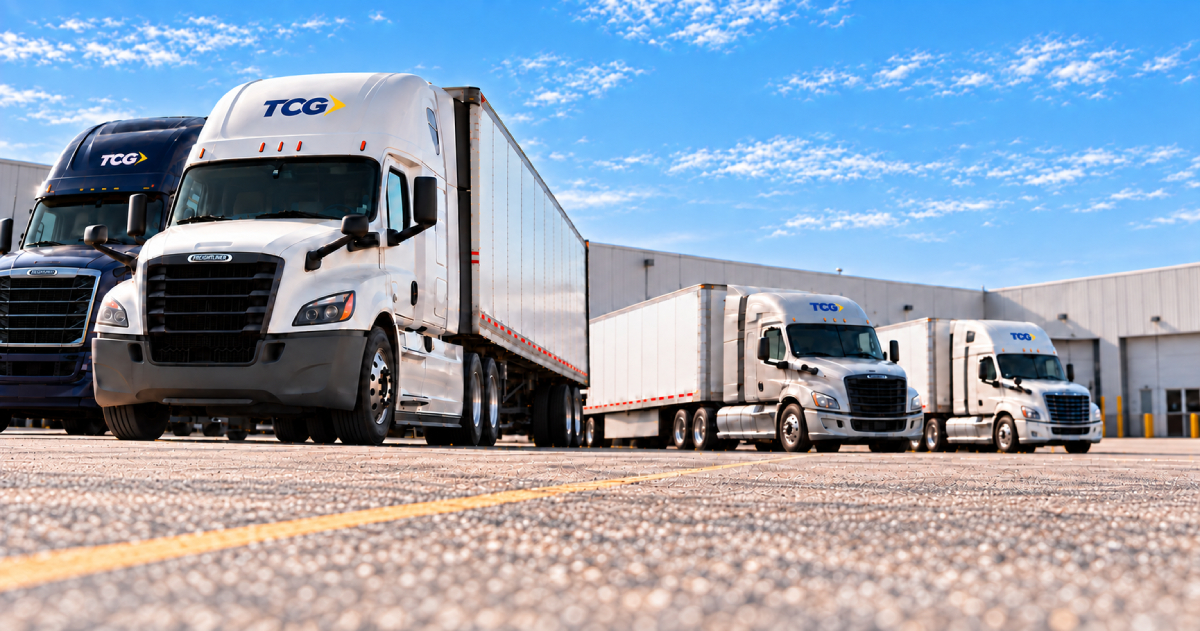
An asset-based carrier owns or leases the physical resources required to move freight, including tractors, trailers, drivers, maintenance facilities, dispatch operations, and safety and compliance programs. Because these resources operate under one organization, asset-based carriers maintain direct control over transportation execution from dispatch through delivery.
That control provides several advantages, including consistent service execution, dedicated drivers and equipment, greater fleet visibility, standardized operating procedures, and established safety cultures.
These strengths make asset-based transportation particularly effective for:
- Dedicated transportation programs
- High-volume contract freight
- Predictable shipping lanes
- Manufacturing replenishment
- Plant-to-distribution center movements
- Time-sensitive recurring shipments
For customers moving consistent freight on established lanes, fleet ownership delivers reliability and operational consistency. However, asset ownership also creates natural limitations. Capacity is constrained by the number of available trucks, trailers, drivers, and the geographic footprint those assets can efficiently serve. Even the largest fleets cannot economically position equipment in every market every day.
What Does a Freight Broker Actually Do?
Unlike an asset-based carrier, a freight broker coordinates transportation by sourcing qualified carrier capacity rather than relying solely on its own fleet.
Modern brokers manage transportation through carrier sourcing, capacity procurement, rate negotiation, shipment visibility, exception management, carrier performance monitoring, and customer communication.
Today’s leading brokerages add value through:
- Large carrier networks
- Transportation technology
- Market intelligence
- Capacity flexibility
- Access to specialized equipment
One of the biggest misconceptions is that brokerage simply means “finding a truck.” In reality, effective brokers manage transportation execution from pickup through delivery, qualifying carriers, monitoring shipments, resolving issues, and maintaining communication throughout the process.
Done well, brokerage functions as an extension of a shipper’s transportation department rather than simply acting as a transaction intermediary.
Asset Ownership Doesn’t Automatically Mean Better Service
Owning trucks doesn’t automatically translate into better transportation service. Every fleet has geographic limitations. Seasonal demand regularly exceeds available capacity. Specialized equipment may fall outside an asset carrier’s fleet, and unexpected customer demand can quickly outgrow dedicated assets.
Meanwhile, brokerage networks often provide:
- Faster access to available capacity
- Broader geographic coverage
- More specialized equipment options
- Greater flexibility during disruptions
- Additional routing alternatives
During produce season, holiday shipping peaks, severe weather, or unexpected manufacturing surges, brokerage networks frequently become essential to maintaining service continuity.
Ultimately, customers experience execution, not ownership. Transportation performance depends on how effectively freight is planned, managed, monitored, and communicated throughout the shipment lifecycle.
Asset-Based Carrier vs. Broker: Comparing the Trade-Offs
Each transportation model offers distinct advantages depending on the shipment.
Operational Control
Asset-based carriers directly manage drivers, equipment, and operating procedures, creating standardized execution. Brokers manage performance through carrier qualification, oversight, and network management.
Capacity
Asset-based carriers are limited by fleet size and equipment availability. Brokers scale quickly through extensive carrier networks.
Geographic Reach
Asset fleets perform best within established operating regions, while brokers provide national, regional, and cross-border flexibility.
Specialized Equipment
Brokerage often provides faster access to refrigerated trailers, flatbeds, heavy haul, expedited equipment, and oversized transportation.
Market Responsiveness
Brokerage typically adapts more quickly to seasonal demand spikes, capacity shortages, emergency shipments, and irregular freight patterns.
For many shippers, these are complementary capabilities rather than competing business models.
Why Many Transportation Providers Operate Both
Transportation demand changes constantly. Customer networks expand, weather disrupts operations, capacity tightens, and seasonal surges create spikes that dedicated fleets cannot economically cover year-round.
These realities have driven many transportation providers to adopt hybrid operating models that combine owned assets with brokerage services.
Rather than replacing fleet operations, brokerage complements them by filling strategic capacity gaps, providing specialized equipment, extending geographic reach, and offering additional flexibility without requiring continual investment in equipment that may sit idle during slower periods.
This blended approach has become an industry best practice because it aligns transportation capacity with customer demand instead of forcing freight into a single operating model.
When an Asset-Based Carrier Delivers the Greatest Value
Asset-based transportation is often the preferred solution for freight moving consistently through predictable networks.
Ideal applications include:
- Dedicated transportation
- Automotive supply chains
- Manufacturing replenishment
- Plant-to-distribution center transportation
- High-volume recurring lanes
Benefits include consistent drivers, familiarity with customer facilities, standardized operating procedures, stable service performance, and reduced operational variability.
When Brokerage Delivers More Value
Brokerage often provides the better solution for:
- Seasonal capacity surges
- New market expansion
- Specialized equipment
- Cross-border transportation
- Project freight
- Expedited shipments
- Irregular shipping patterns
With access to extensive carrier networks, brokers can often secure capacity more quickly than individual fleets can reposition equipment. This provides faster carrier sourcing, greater routing flexibility, broader equipment access, and improved scalability.
Why TCG Combines Both Models
At TCG, we don’t begin by asking whether freight should move on an owned truck or through brokerage. We begin by evaluating the shipment.
Every transportation decision considers lane characteristics, equipment requirements, transit expectations, capacity availability, customer priorities, and service commitments.
Depending on those requirements, the solution may include asset-based trucking, freight brokerage, dedicated transportation, or a blended capacity strategy.
This consultative approach allows us to match the right transportation resources to each shipment instead of attempting to maximize utilization of one business model. Sometimes our fleet provides the best answer. Other times, our brokerage network delivers greater flexibility, broader reach, or faster access to specialized equipment.
The objective is always the same: consistent execution that supports the customer’s supply chain.
Questions Every Shipper Should Ask
Rather than simply asking, “Are you an asset-based carrier?” shippers should ask:
- Which freight moves on your own equipment?
- When do you utilize brokerage capacity?
- How are partner carriers qualified?
- What shipment visibility technology do you provide?
- How do you manage service exceptions?
- How do you scale during peak demand?
- How do you measure carrier performance?
These questions reveal far more about transportation execution than truck ownership alone.
The Best Capacity Strategy Uses Both
The debate between an asset-based carrier and a freight broker often overlooks the bigger picture. Asset-based transportation provides operational control and consistency. Brokerage delivers flexibility, scalability, broader geographic reach, and access to specialized capacity. Modern supply chains require both.
As transportation networks become more complex, providers that successfully integrate asset-based operations with brokerage capabilities are better positioned to maintain service across changing market conditions.
TCG’s integrated transportation capabilities combine asset-based trucking, brokerage, dedicated transportation, and customized logistics solutions into a single strategy designed around your business, not ours. Contact TCG today to learn how our flexible transportation network can help strengthen your supply chain with the right capacity for every shipment.